



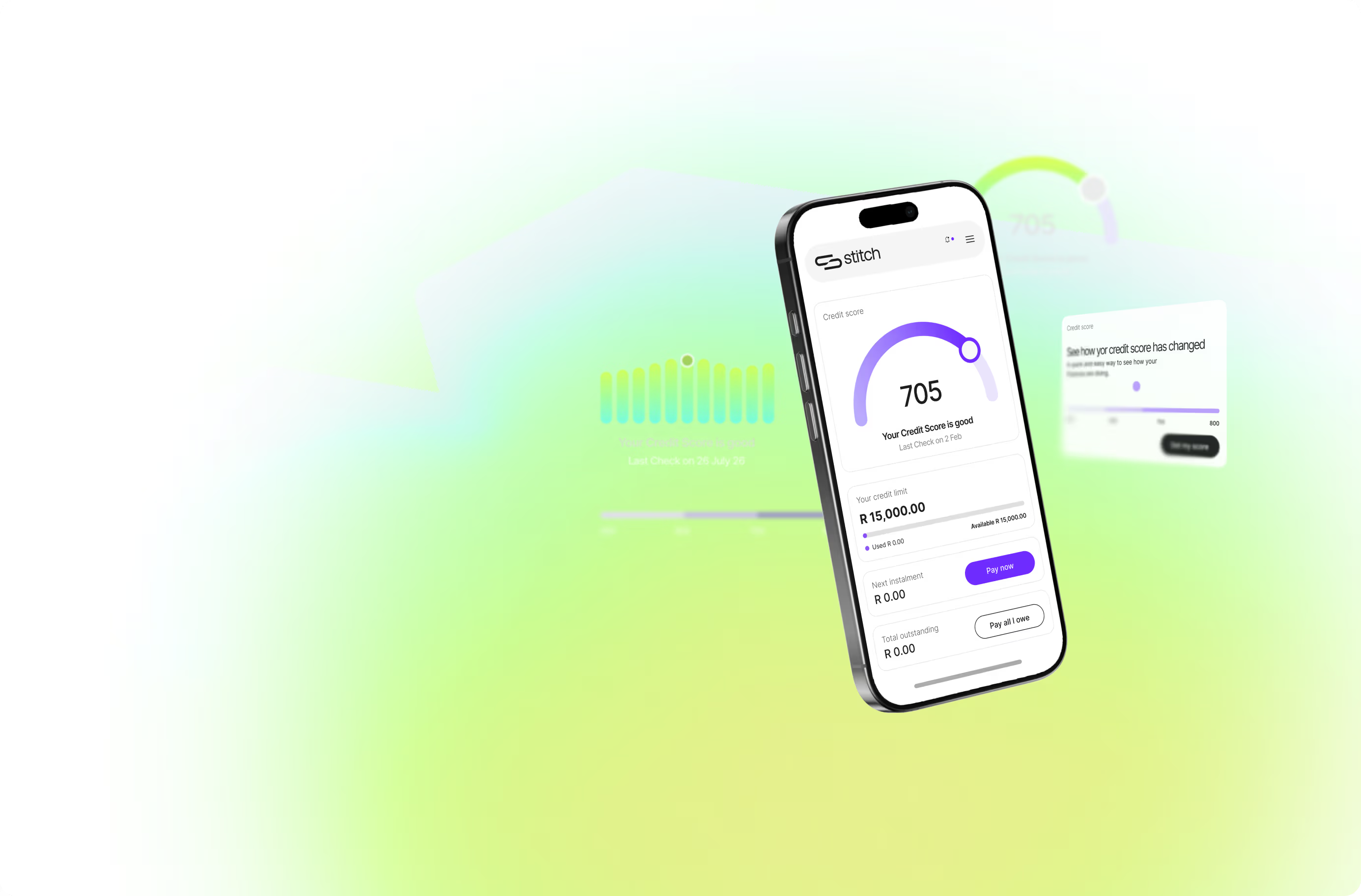
You have a credit score right now, and it’s influencing financial decisions that are made about you, such as whether a lender approves you for a loan, what interest rate you’re offered, or even whether a landlord accepts you as a tenant. And yet many South Africans have never seen theirs. Understanding your credit score costs nothing and takes about five minutes. Here’s everything you need to know.
What is a credit score?
A credit score is a three-digit number ranging from 0-999 (or, more typically, from 300-850) that summarises your credit history. It’s calculated by credit bureaus, which are organisations that collect data from banks, retailers, lenders and service providers about how people borrow and repay money. Lenders use your score as a quick way to decide how likely you are to repay a debt.
South Africa has four registered credit bureaus: TransUnion, Experian and XDS. Each maintains its own database and uses its own scoring model, which means your score can differ slightly between bureaus. Most scores in South Africa fall somewhere between 0 and 999, though the exact range varies depending on which bureau you check.
It’s important to understand that your credit score is calculated based on your credit history, not your current financial health. So a salary increase today will not improve your score. A history of on-time repayments, accumulated over months and years, does, along with other factors such as your oldest line of credit, the amount of your available credit you owe at any given time and more.
What counts as a good credit score?
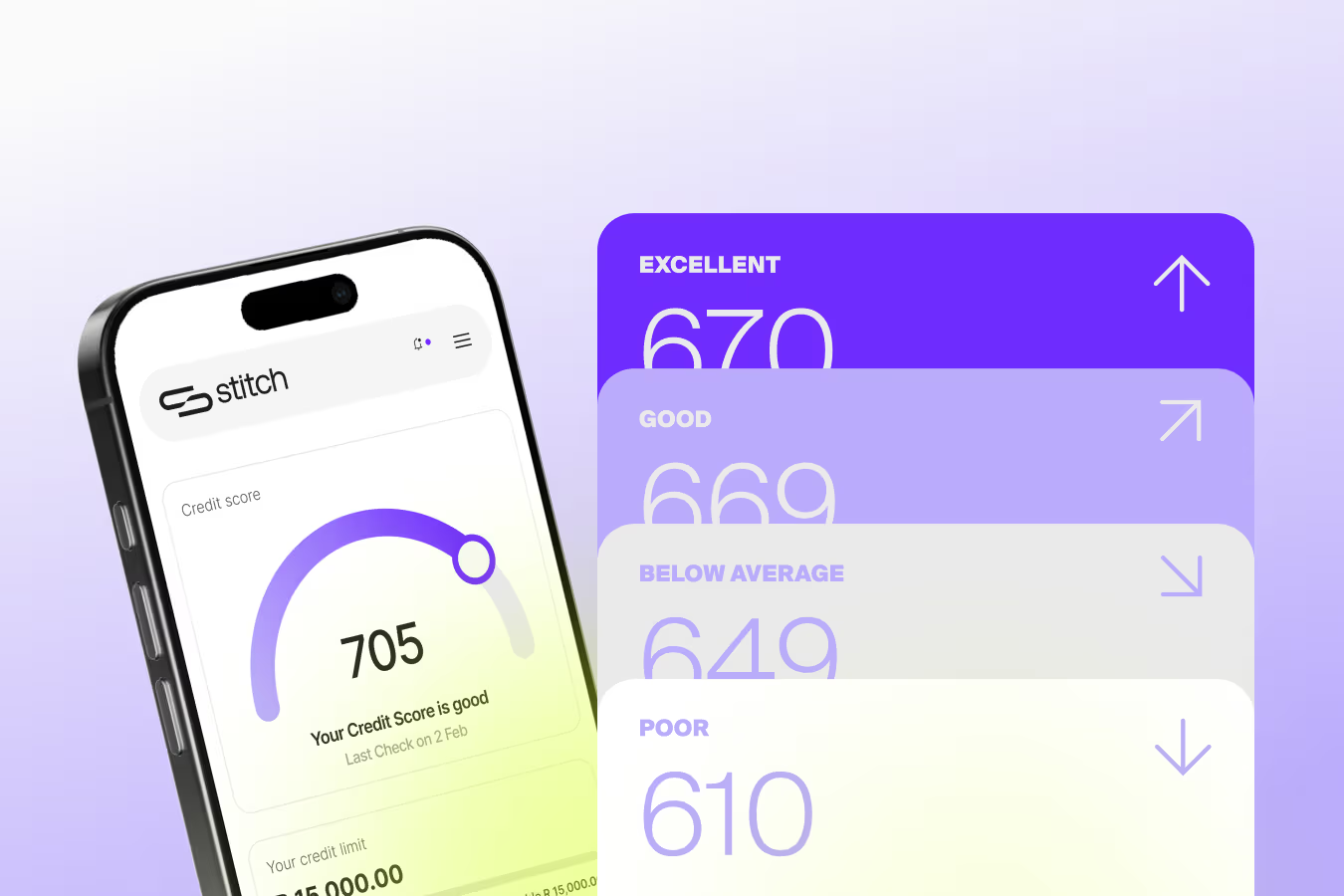
Different lenders have different criteria for what makes a good credit score, so there is no one answer. This is a general guide, based on Experian’s scale:
- Below 610 (poor): most credit applications will be declined
- 610 to 649 (below average): limited options, higher interest rates
- 650 to 669 (good): most applications will be approved at reasonable rates
- 670 and above (excellent): access to the best rates and products
Recent behaviour carries weight too. A score of 640 with no missed payments in the last twelve months reads better to a lender than a score of 660 with three missed payments in the last six.
What affects your credit score?
Five main factors go into the calculation, and they are not weighted equally:
- Payment history (roughly 35%) is the most important factor by a lot
Credit bureaus look at how many of your accounts have late payments, how late they were (30, 60 or 90-plus days), and how recently they occurred. A recent late payment hurts more than one from five years ago. Paying on time, consistently, is the single best thing you can do for your score. - Credit utilisation (roughly 30%)
This is how much of your available credit you are actually using. If your credit card limit is R10,000, and your balance is R8,000, your utilisation is 80%, which lenders read as a warning sign. Keeping utilisation below 30% of each limit is the general rule of thumb. - Length of credit history (roughly 15%)
A longer history gives bureaus more data to work with. Closing an old account you rarely use can shorten your average account age and nudge your score downward, even if that account had a clean record. - New credit applications (roughly 10%)
Every time you apply for credit, the lender takes a formal look at your profile. A profile with multiple recent credit applications signals financial pressure to lenders, even if each application was approved. Spacing out applications helps. - Mix of credit types (roughly 10%)
Holding a few different credit products (a home loan, a credit card, a store account, for example) tends to work in your favour, as it shows you can manage different kinds of borrowing responsibly.
Things that do not affect your credit score
Your bank balance and income are not part of the calculation. Lenders assess affordability separately, but your score itself is based purely on borrowing and repayment behaviour.
Checking your own score does not affect it. Only a hard inquiry from a lender does, and even that is a small factor. Being declined for credit does not directly lower your score either. The inquiry is recorded, but rejection itself leaves no mark.
Your debit card spending, savings habits and investment accounts are also not factored in. Credit bureaus only see accounts where credit has been given to you.

What to do if your credit score is lower than you would like
Scores respond to behaviour over time, and the most recent behaviour matters most. A few practical steps that make a real difference:
- Set up debit orders for all recurring payments so you never accidentally miss a due date. Even a single missed payment can cause a big drop. If you’ve missed payments in the past, getting up to date and staying there is the fastest way to start recovering.
- Pay down credit card and store card balances where you can, keeping utilisation below 30% of each limit.
- Avoid applying for multiple credit products in a short space of time, and think twice before closing old accounts with clean histories.
If there are errors on your credit report (wrong account details, payments marked late when they were paid on time, accounts that do not belong to you), you have the right to dispute them. All South Africans are entitled to one free credit report per year from each of the four major bureaus.

How to check your credit score for free
Your Stitch account shows you your current credit score and helps you understand how your spending and existing credit affect it. Knowing where you stand is the first step to making smarter financial decisions, and having that information available alongside your transaction history means you’re not guessing.